RYAN ZERNACH

Full-Stack AI Systems Engineer

Ryan_Zernach_2025_Senior_AI_Systems_Engineer_Remote_United_States

🧊 Global Glaciers: Where on Earth Are They Located?

A map can answer a scientific question before a spreadsheet explains it. This project turns glacier location and elevation data into a visual tour of where the world's largest glaciers sit—and the patterns their distribution brings into focus.
Related Links
Jupyter Notebook (Google Colab)
🧊 Global Glaciers: Where on Earth Are They Located?

Summary

Where are the largest glaciers, and at what elevation do they live? I used mapping and GIF-generation tools to make both questions visible, bringing the geographic pattern out of the table and onto the map.

Tech Stack

Basemap (Mapping Library), imageio (GIF creator library), Numpy, Pandas, Matplotlib, Seaborn, Photoshop, Itertools, Libgeo

Team

Solo Project

Timeline

Five Days

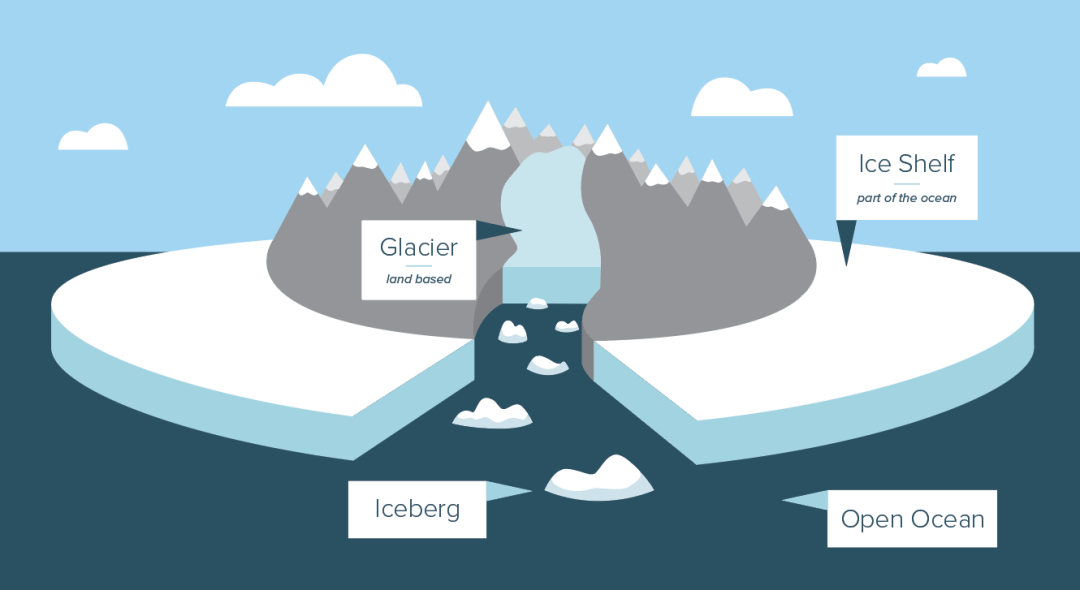
It is tempting to call Antarctica the world's largest glacier. It is not: Antarctica is an ice sheet, as is Greenland. So what separates a glacier from an ice sheet?

🧊 Global Glaciers: Where on Earth Are They Located?
NOTE: Illustration Courtesy of University of California

The illustration draws the distinction: a glacier resides on land, while an ice sheet floats atop the ocean's surface—like an ice cube in your favorite drink. And an iceberg? A miniaturized ice sheet. That leaves the more interesting question: where across Earth's landmasses are the actual glaciers? I have yet to see one in person.

🧊 Global Glaciers: Where on Earth Are They Located?
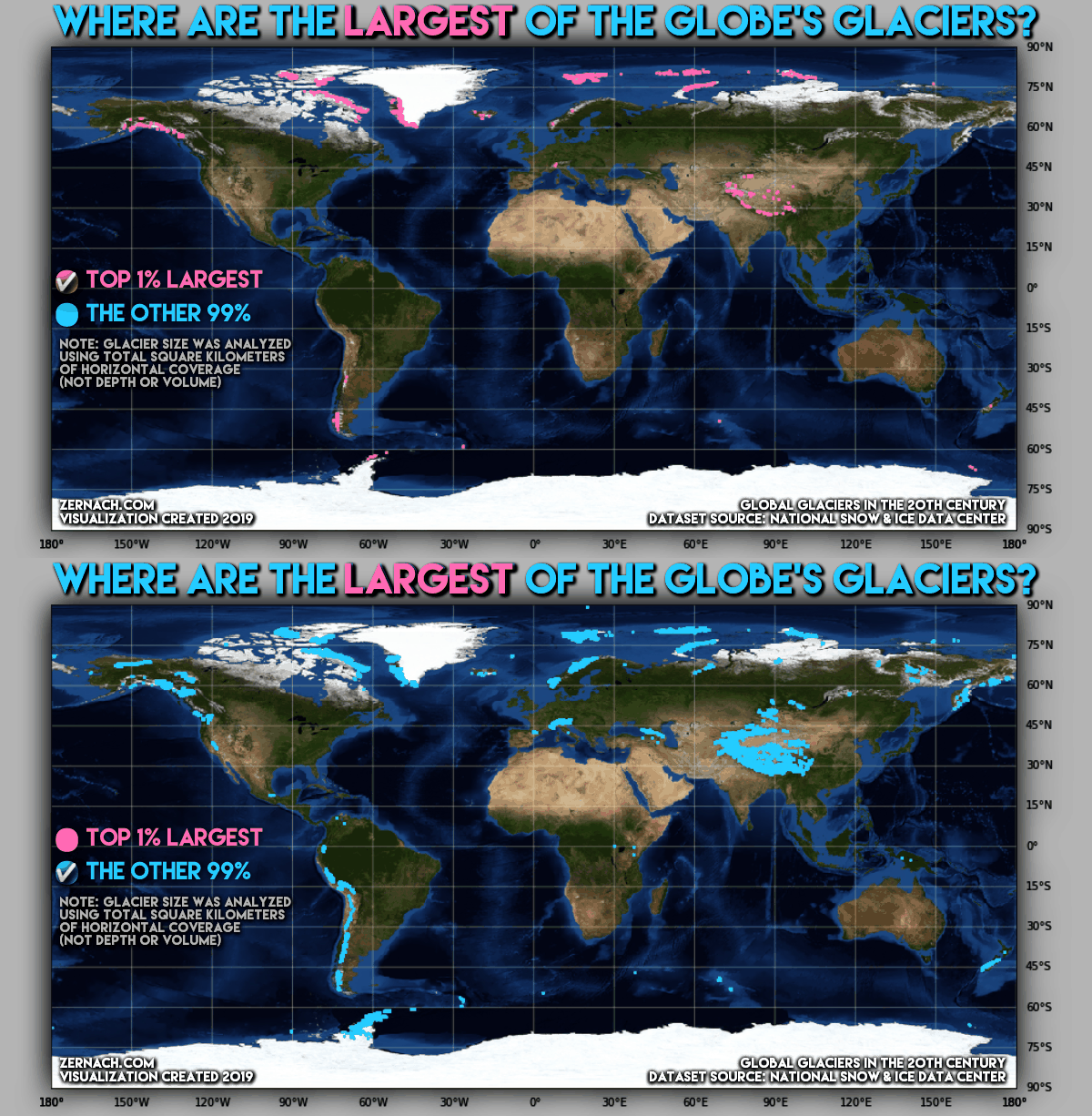
NOTE: These are the locations of 130,000+ glaciers. Therefore, the top 1% are the locations of ~1,300 (pink) glaciers and the other 99% are the locations of ~128,700 (blue) glaciers.

Before this analysis, I imagined glaciers only at the poles: the Arctic and Antarctic. The map suggests a broader question: what else determines where a glacier can exist on Earth?

🧊 Global Glaciers: Where on Earth Are They Located?
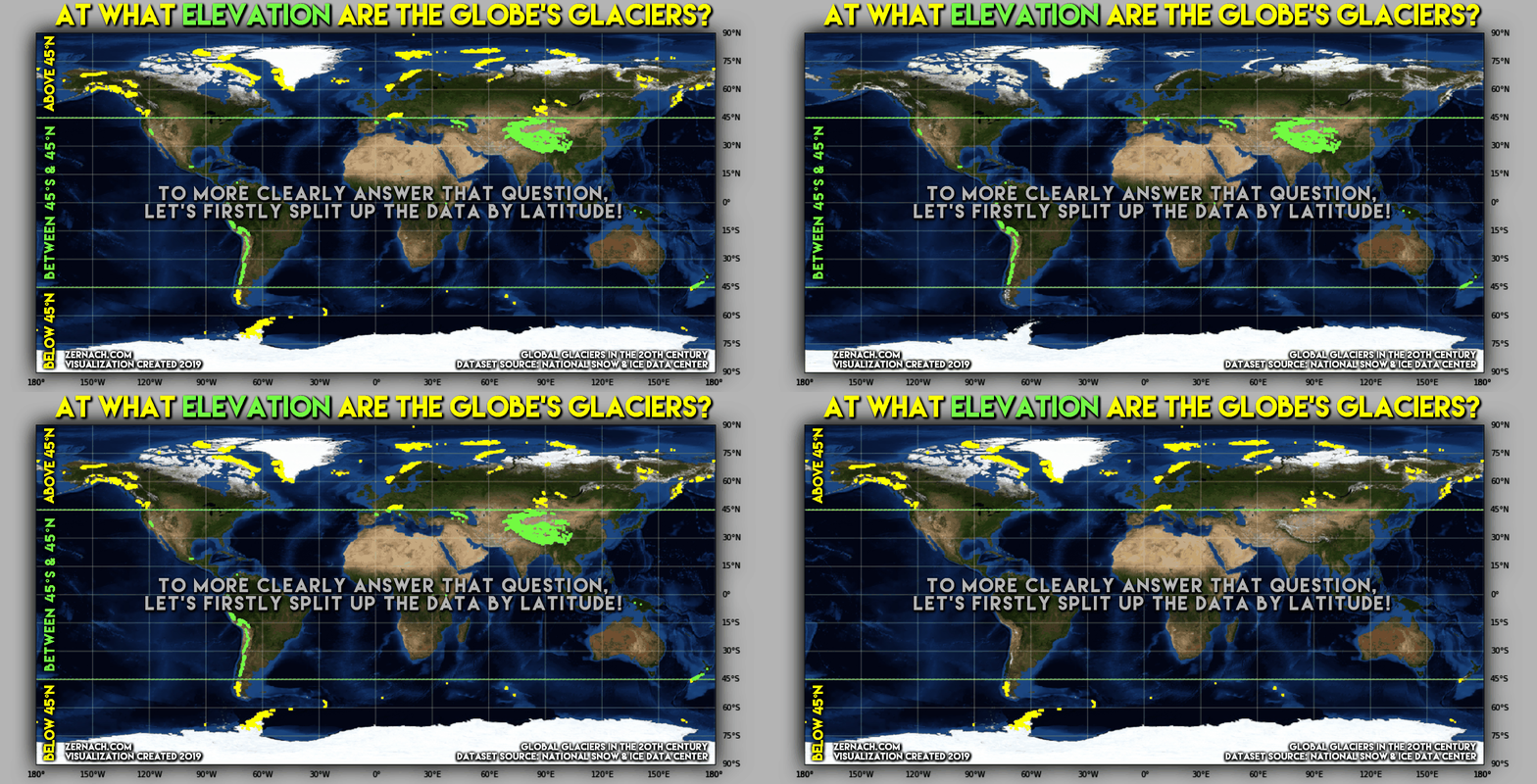
NOTE: Of the 130,000+ glaciers within this dataset, ~30% are (green) glaciers between 45°S-45°N, and ~70% are (yellow) glaciers that are either below 45°S or above 45°N.

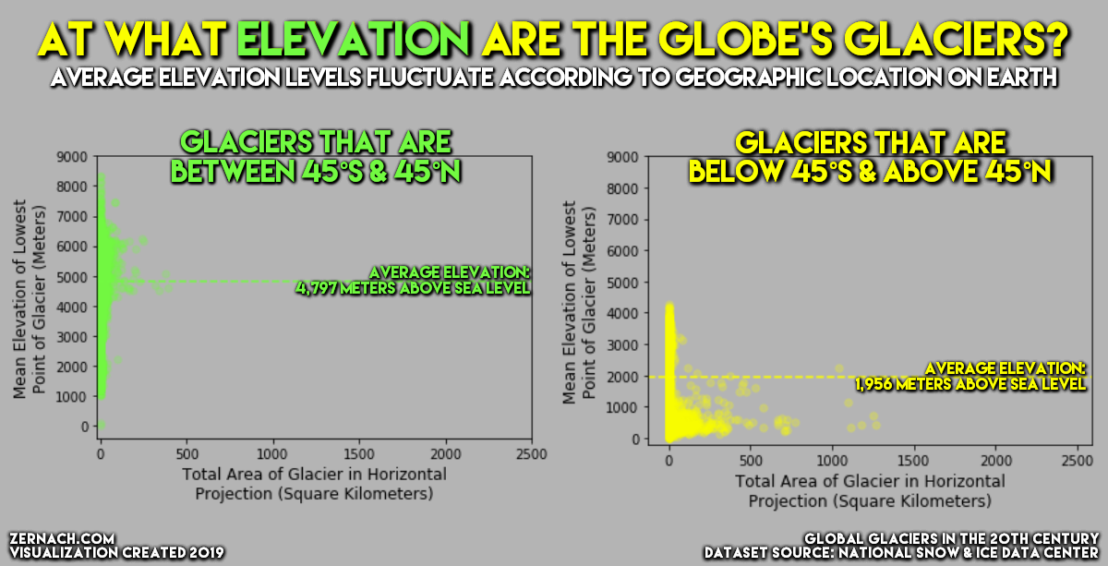
The map splits the data into green and yellow glacier groups. Their locations are different; their overall altitudes are, too.

🧊 Global Glaciers: Where on Earth Are They Located?
NOTE: The average elevation of the green subset of data is nearly two-and-a-half times the average elevation of the yellow subset of data.

Conclusion

For anyone planning to explore Earth's frozen landscapes, the map offers a practical answer: head far north, far south, or high into the mountains. Dress warmly.