RYAN ZERNACH

Senior AI Systems Engineer

Ryan_Zernach_2025_Senior_AI_Systems_Engineer_Remote_United_States

🧾 Agentic Federal Tax Preparation

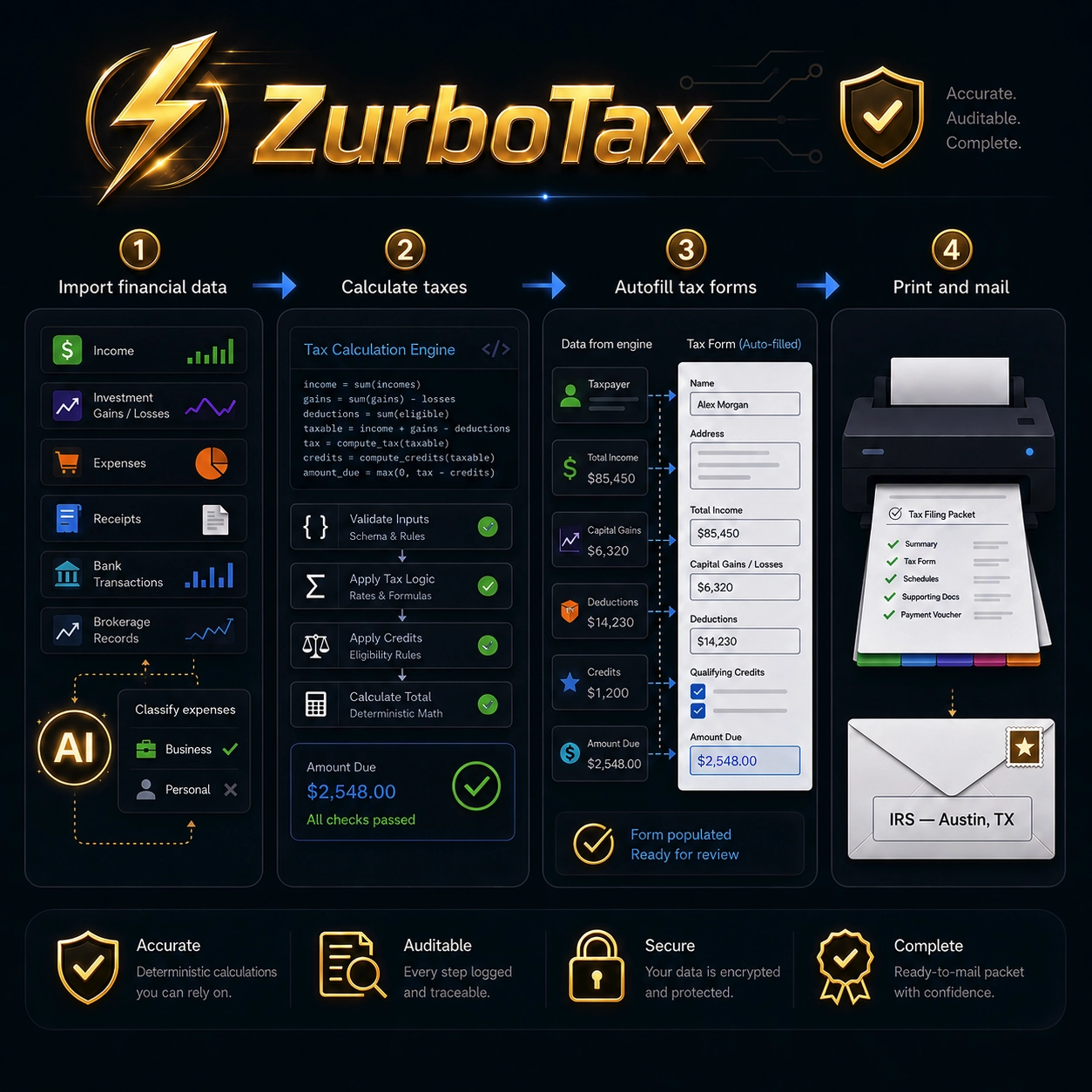
I leveraged AI to do my taxes, and for the first time in 12 years of owning LLCs, this year's preparation was the fastest, cleanest, and most professional I have ever had. Equipped with GitHub and Codex/Claude, I built a personal financial aggregator dashboard in just a few hours that pulled together bank statements, credit-card statements, business-versus-personal expense categorization, and auto-rules that pushed my federal tax preparation toward autopilot.

Related Links
GitHub Profile
OSS Portfolio Page
AI Methodologies
Agentic federal tax preparation workflow image showing Codex, GitHub, AI, LLMs, and automations

Summary

Most people treat taxes like a seasonal emergency. I wanted the opposite: a system. This project was about using GitHub and Codex to build the infrastructure before filing season became painful: aggregate financial data, categorize spending automatically, preserve the logic in version control, and arrive at federal tax prep with cleaner books, sharper visibility, and far less friction.

What I Built

A personal finance dashboard and supporting rule engine that organizes statements across accounts, tracks spending patterns, and keeps business versus personal expense separation visible enough to support real tax preparation rather than just casual analytics.

Outcome

The biggest win was not novelty. It was professionalism. I have never prepared my taxes this quickly or this cleanly, and the system now improves over time because categorization logic and review decisions can live in the repo instead of only in my memory.

Key Details

The sections below cover the original tax-prep pain, the finance system itself, and why GitHub plus Codex changed the quality of the workflow.

Why I built this in the first place

What the dashboard actually automated

How GitHub and Codex fit into the loop

What changed by tax season

What Moved Toward Autopilot

  • Statement collection across the accounts I actually use.
  • Business versus personal expense separation.
  • Recurring merchant categorization through reusable rules.
  • A persistent review surface instead of annual financial archaeology.
  • A code-based process that should get better every tax season, not restart from zero.

Important Boundary

I did not build a robot to file my return blindly. I built a system that made the preparation legible, structured, and far easier to review. That distinction matters. The agentic part handled organization and operational throughput; the serious part was arriving at tax prep with cleaner books and better judgment.