RYAN ZERNACH

Senior AI Systems Engineer

Ryan_Zernach_2025_Senior_AI_Systems_Engineer_Remote_United_States

🧭 AI Engineering Methodologies

AI changed software engineering in two distinct ways. First, it changed how elite engineers code: plans beat vibes, skills beat one-off prompts, and verification beats blind trust. Second, it changed what elite engineers build: retrieval, graphs, agents, evals, observability, and MCP are now part of the product surface. My edge is fluency in both tracks. I can direct AI inside the delivery loop and architect AI into the product itself.

Related Links
Gauntlet AI Fellowship
Zencoder Admin
Agentic Federal Tax Preparation
Hardware is Horsepower
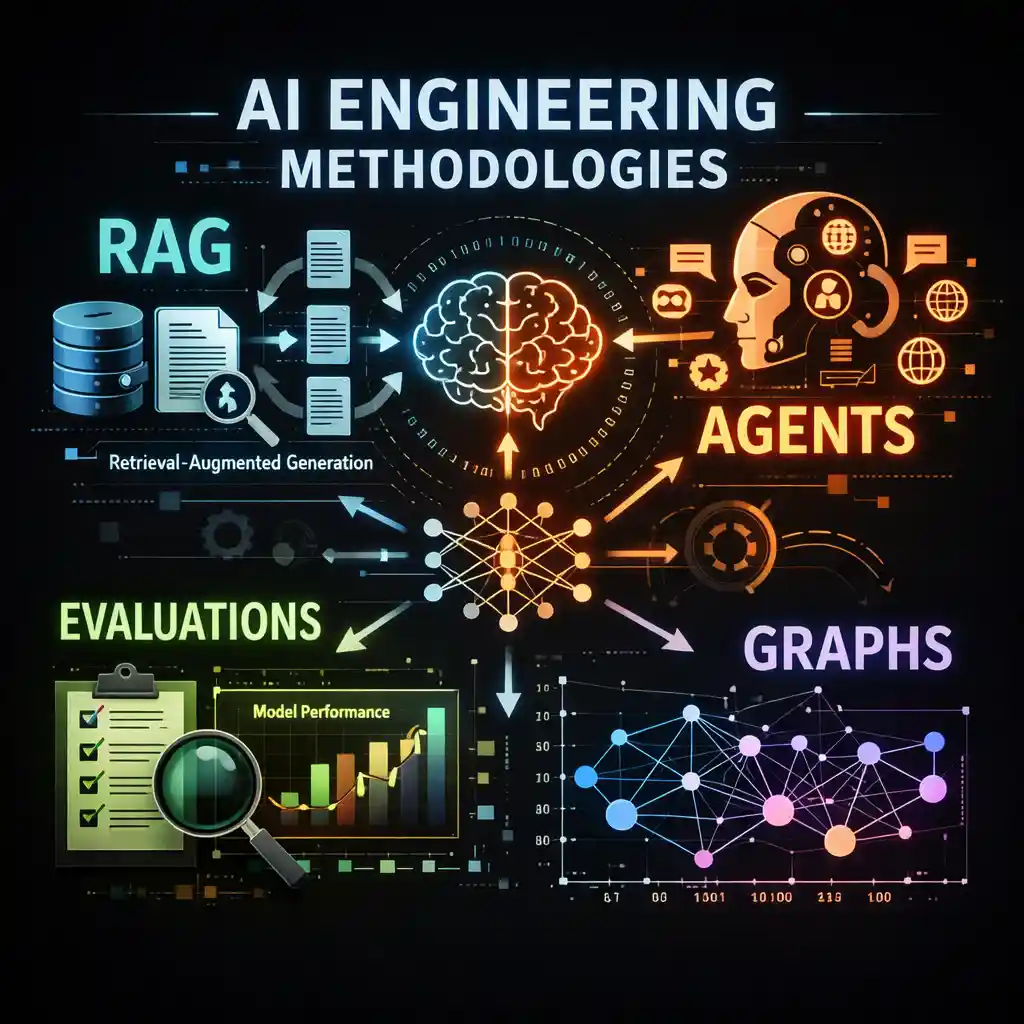
AI engineering methodologies featured image covering RAG, agents, graphs, embeddings, evaluations, and LLM ops

Summary

This is the methodology I use to ship premium AI-native products without turning the codebase into a slot machine. It combines operating discipline, strong task decomposition, reusable skills, hard verification, and architecture-level understanding of modern AI systems.

The Shift

We were once actors in the movie as software engineers. Now we are directors. The job is less about manually typing every scene and more about briefing agents, setting guardrails, reviewing takes, and deciding what earns a merge.

Premium Positioning

That is why "AI is the engineer and I am the tool" is intentionally provocative. The valuable human does not disappear. The valuable human becomes the system designer, editor, evaluator, and accountable owner.

The Areas That Matter

A premium AI engineer needs range, but not random range. The work clusters into a small number of capabilities that compound together. Coding with AI, verification, RAG, agents, evals, and product sense are the visible pillars. MCP and observability are the connective tissue that make the whole system real.

  • Coding with AI: methodology, plan mode, skills, and task decomposition
  • Verification: how you review and own AI output before it ships
  • RAG: architecture, chunking, retrieval quality, and failure modes
  • Agents: tool use, failure handling, guardrails, and controlled autonomy
  • Evals: datasets, scorecards, and release gates
  • Product Sense: tradeoffs, prioritization, and communication
  • MCP + Observability: the operational backbone underneath the product

Track 1: Coding With AI

This is where most people stop at prompt tricks. I do not. I run a methodology. The goal is not to feel faster for an afternoon. The goal is to build a repeatable operating system for shipping trustworthy software with AI in the loop.

Methodology over prompt roulette

Greenfield and brownfield are different sports

Tasks, tickets, and MCP-connected systems

Skills are reusable operating procedures

This is where the methodology gets durable

Verification is the separator

Track 2: Building With AI

The second track is product architecture. Here the question is not how I use AI to code faster. The question is how I design systems where AI becomes part of the product itself without turning the user experience into a hallucination machine. The four visible pillars are RAG, graphs, agents, and evals. Around them sit MCP, observability, and product sense.

RAG

Chunking, embeddings, retrieval quality, failure modes

Graphs

When structured relationships beat flat retrieval

Agents

Tool use, multi-step reasoning, guardrails

Evals

Where most candidates fail. The separator.

MCP

How the model reaches real systems

Observability

What the model saw, did, cost, and broke

Product Sense

Tradeoffs, prioritization, comms

AI Engineering Topics

These are the conversations that separate someone who has merely used AI tooling from someone who can architect, instrument, debug, and ship serious AI systems under real business constraints.

Explain RAG to me like I am an engineer who has never implemented it. Then tell me its failure modes.

When would you use a graph-based retrieval approach over a vector store?

Walk me through designing an agent that does not go off the rails.

What is the difference between LangSmith and LangFuse? Which would you use?

How do you build an eval set from scratch? Where does the data come from?

What does observability mean in an LLM application?

How do you run a prompt experiment without breaking production?

What is the hardest debugging problem you have encountered in an AI application?

What Premium Looks Like

Premium AI engineering is not maximum hype. It is the ability to move fast without turning the system into a black box, to use agents without surrendering standards, and to explain the architecture in plain English to both technical and non-technical stakeholders.

Why Hire Me For This

I sit at the intersection of product sense, full-stack shipping, and AI systems thinking. I can run AI inside the development loop and build AI into the product loop. That combination is commercially useful, technically rare, and exactly where the market is heading.