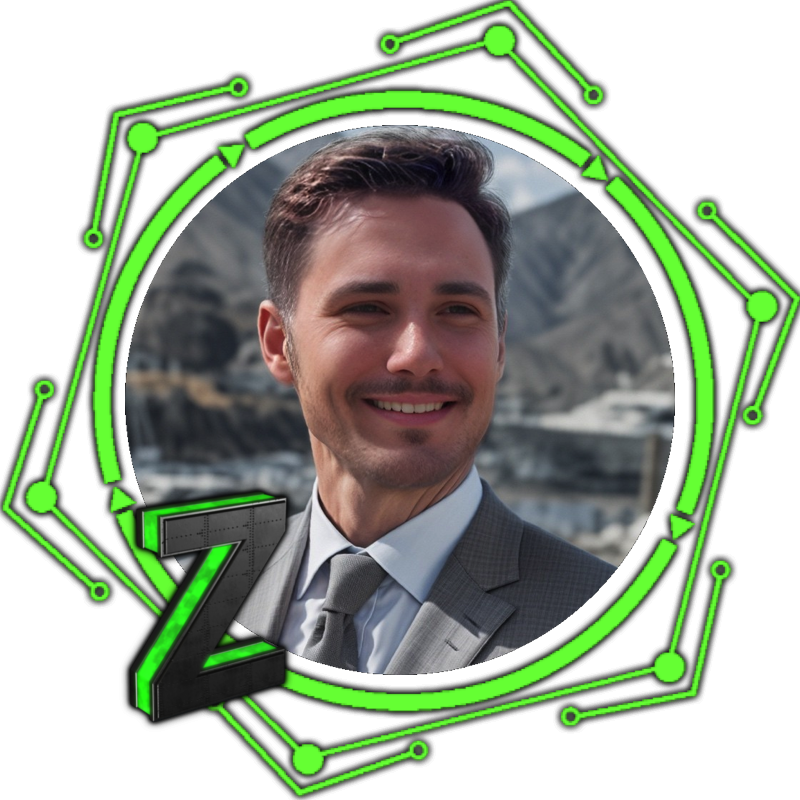
RYAN ZERNACH

Senior AI Systems Engineer

Ryan_Zernach_2025_Senior_AI_Systems_Engineer_Remote_United_States

🧬 Healthcare Is My #1 Priority

I am a Senior AI Systems Engineer, and I have been fortunate to build and ship several AI systems at real scale, including products used by 1M+ users. I want my engineering work to help people live healthier, happier, longer lives. That is why healthcare is my top priority. I care about building systems that help care teams move faster and think clearer without compromising trust, safety, or accountability. This is not a passing interest for me. It is the next chapter I feel most called to pursue. If your company is building serious healthcare AI for real workflows, real operators, and real outcomes, I would be honored to contribute.

Related Links
Production LLM Systems
AI Automations
OSS Contributions
Healthcare technology workers collaborating around AI engineering and hospital operations

🔐 HIPAA-Compliance⚕️ is an Engineering Discipline

In healthcare AI, I treat HIPAA as a system design requirement, not a compliance checkbox. My default is minimum-necessary data flow, strict access boundaries, and auditability from day one so ePHI stays protected without slowing clinicians down. I build for the operational realities that matter in production: least-privilege access, controlled change management, incident-ready processes, and evidence-backed controls that hold up in review. My fintech work at Finequities sharpened those habits, and I apply them directly to HIPAA-heavy environments where privacy intent has to show up in everyday engineering execution.

  • Data handling boundaries: explicit separation of ePHI-bearing systems, scoped interfaces, and minimized replication paths.
  • Identity and access controls: role-based access, least privilege, and strict production permission lifecycle management.
  • Encryption and transport safety: protected data in transit and at rest, with key-management decisions tied to risk level.
  • Audit trail integrity: immutable access and change logs that support internal reviews, incident analysis, and compliance evidence.
  • Vendor and integration guardrails: third-party review standards, BAA-aware decisions, and no silent data leakage through tooling.
  • Incident preparedness: playbooks, escalation paths, and post-incident correction loops with real ownership.
  • Release discipline: compliance-sensitive changes gated by clear review criteria before production deployment.

🩵 Why Healthcare?

Healthcare is where great engineering meets human consequence, and it is the one industry every human on earth depends on many times in life. I have spent years building scalable AI in high-pressure production environments, and I want to channel that same operating model into healthcare with humility and care. In most industries, better software improves convenience. In healthcare, better systems can return time to clinicians, reduce preventable friction, and support clearer decisions when stakes are high. That is the challenge I want most: complex work, high standards, and real accountability to outcomes. I am drawn to environments where reliability is non-negotiable, trust must be earned every day, and technical quality is measured by how well the system serves people under pressure. This path is also personal for me. My sister works in nursing, and healthcare has been a serious part of my family story. I have seen how demanding this work is and how much impact better tools can have for people on the front lines. Healthcare runs in the family, and I want to contribute from my side of the table by building AI systems that are dependable, intelligent, and truly worthy of the people who rely on them. My passion is to build technology that gives clinicians more support and gives patients better chances at healthier, happier, longer lives.

🏛️ Engineering AI Systems, such as:

  • Agentic AI systems that remove administrative drag while preserving trust, auditability, and real-world usability.
  • Evaluation pipelines that separate deterministic truth from judgment-based quality so teams can improve models with confidence, not guesswork.
  • Human-in-the-loop workflows that give clinicians leverage without stealing control where control matters most.
  • Operational dashboards that make reliability, latency, cost, and failure modes visible enough to manage like adults.
  • Production-grade architecture that can stand up to scrutiny, scale responsibly, and earn its place in a high-stakes environment.
Related Links
CellarTracker
Gauntlet AI
Zencoder
Agentic Taxes

🧠 Mindset Matters Most

My engineering style is ambitious, disciplined, and production-minded, but always in service of the people who depend on the system. I want AI to stand out for the right reasons: it works, it is understandable, it is dependable, and it earns trust when the pressure is real.

  • Start from the real workflow, the real operators, and the real failure modes, then build around safety, observability, and crisp ownership boundaries.
  • Treat quality gates as core infrastructure, not cleanup work somebody promises to do later.
  • Ship meaningful progress quickly, then harden reliability, controls, and clarity every cycle.
  • Build systems that teams can trust, understand, and improve long after the first release.
Related Links
Hardware is Horsepower
HIPAA Architecture
AI Engineering Methodologies

🤝 Healthcare Career Goals

  • Senior AI Systems Engineer roles building healthcare technology that visibly improves patient outcomes, clinician effectiveness, access to care, and the dignity of the care experience.
  • Teams that treat AI evaluation, monitoring, privacy, safety, and deployment discipline as foundational engineering responsibilities, especially when the product touches high-stakes clinical or patient workflows.
  • Opportunities to apply my experience in LLM infrastructure, RAG, agents, evaluations, distributed systems, mobile apps, and cloud operations to healthcare systems where reliability and human impact both matter.
  • Products that help clinicians spend less time fighting fragmented software and more time exercising judgment, empathy, and care.
  • High-standard environments where rigor beats hype, evidence beats demos, and the mission is worthy of real effort.

⛑️ Closing Note

I have built scalable AI systems for large, real-world audiences, and I want my next chapter to be healthcare with the same seriousness and deeper purpose. I care deeply about helping people live healthier, happier, longer lives, and I want that mission to define what I build next. If your team is building healthcare AI with real standards, real ambition, and a real commitment to quality, I would value the chance to talk. I am ready to help build systems people remember quietly, for the best reason: they worked when they were needed most.

Schedule a Meeting
Book Time with Ryan